

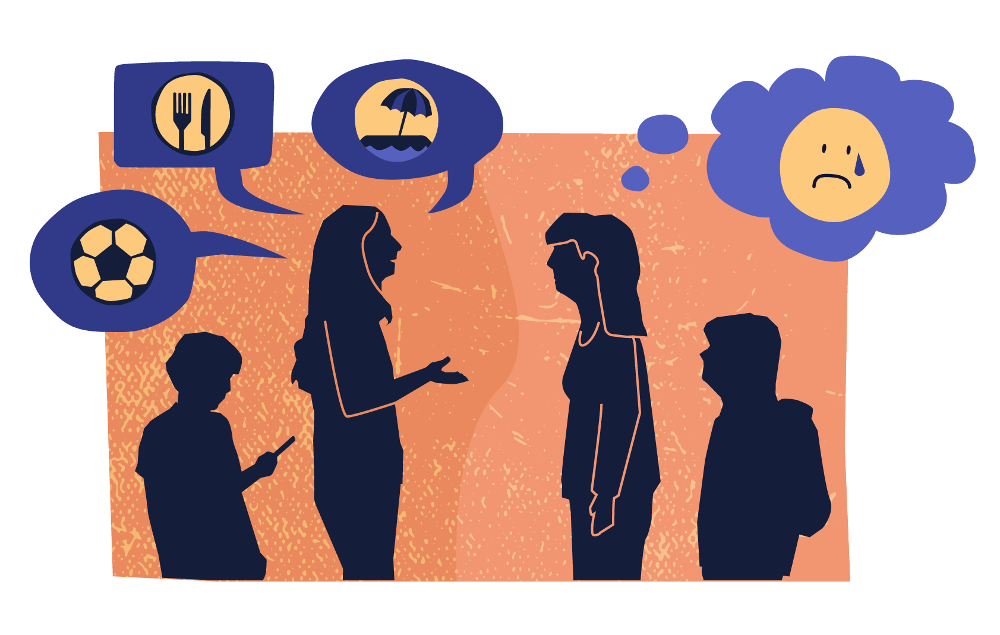
We all know children with SEND can feel isolated. Yet, the isolation of their parents is often overlooked and goes unnoticed.
Listening to parents who have ‘been there’, we identify some of the barriers isolating SEND parents from others. Using inspiration from children with SEND, we offer suggestions to help you find connections and feel less isolated.
Not Alone In Feeling Isolated
Feelings of isolation among SEND parents are common. For instance, our charity often hears from isolated parents reporting:
- Feeling like an outsider
- Missing the company of other adults
- Feeling there’s no one who understands
- Having no one to turn to for help
- Feel as though they’ve been forgotten
- Having lost their identity.
It is the experience of parenting additional needs and disabilities that separates us from other parents. Certainly, you wouldn’t be alone in feeling isolated.
Why It Matters
As parents, we try hard to support the needs of our children. Meeting the needs of a child with SEND can be especially demanding. As a result, attending to their needs can mean we neglect our own. However, it is important to recognise the wellbeing of parents and children is interlinked. What benefits us as parents, benefits our families. Isolation detaches us from society. Yet, we are all social creatures (some of us more so than others). We all benefit from having connections with others and a sense of belonging. In particular, as parents, it’s beneficial for us to connect with other parents so we receive support.
Just like our children, we deserve to be understood, to participate and receive support when we need it.

Understanding Why We Feel Isolated
Isolation happens when we are disconnected from others, either physically or mentally. The result is we may not participate, meaning we don’t receive the benefits.
“Isolation for me came in two parts: there was the school and the wider community/emotional isolation I felt as a result of my son’s challenges. For me, it’s a feeling that you can’t join in, you don’t belong, you’re not welcome, you’re different.” – Heidi, our SEND Parent Mentors Coordinator
SEND impacts families differently. Yet, there are some typical challenges that can contribute to feeling isolated. Interestingly, these are similar challenges to those our children face. As such, it can be helpful to take the approach we do when advocating, i.e. understanding the challenges to find better solutions.
Together, we will identify some common challenges. Broadly, these challenges can be categorised as barriers. Using examples, we will explore how these can impact our connections, contributing to us feeling isolated.
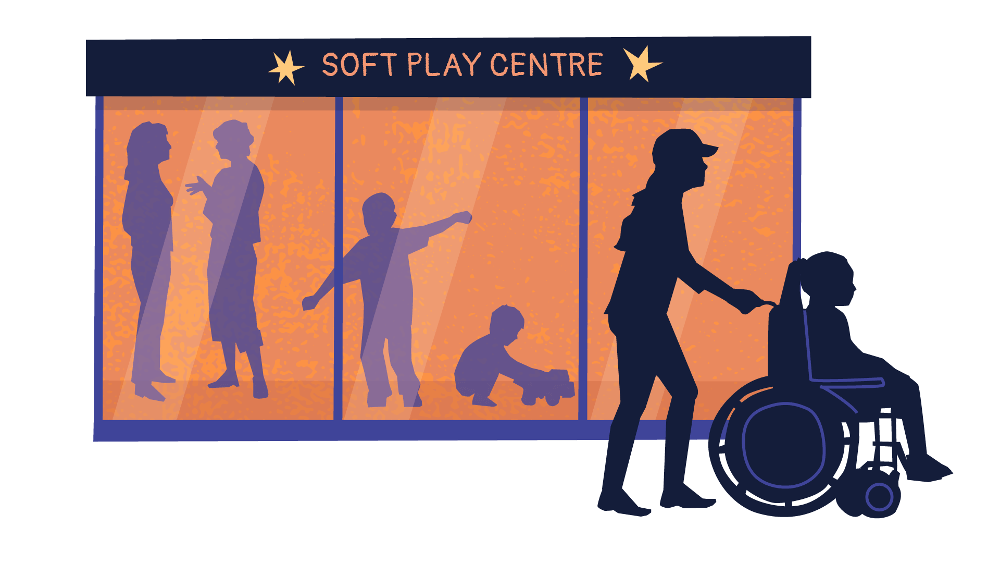
Physical Barriers
Due to the demands of parenting and daily life, we can feel physically isolated. Depending on our circumstances, our interactions with other adults can become limited. When we are unable to participate, our world becomes smaller. Simply, barriers restrict opportunities to be connected, to belong, and to feel less isolated.
Access
For some of us, participating in society can be challenging. This can be due to issues including disability access and sensory stimulation. By comparison, access isn’t an issue for the majority of families. So, we can feel unequal to other parents.
Places and events that can accommodate our children’s needs may be few. This can constrain the opportunities for us (and our children) to participate. Ultimately, the opportunities available depend on our location.
Location
Where we live can pose challenges for some families. Distance is a factor in attending support groups and SEND activities. Likewise, how far away friends and family live can constrain opportunities to connect.
Many of us are reliant on access to transport. Without it, we can feel cut off from the outside world. Not all families have their own transport, and public transport could be a constraint. Additionally, SEND can mean it’s not always practical to get out and about.
Practical
For some of us, seclusion isn’t a choice at all. For instance, children’s medical issues can be severe, essentially keeping families inside the home. Without visitors, both parents and children can be physically isolated.
Our children’s needs affecting their behaviour can be a practical constraint for many of us. We can worry others won’t understand. For this reason, going to groups/clubs/activities can simply feel unworthwhile. Likewise, this can affect decisions around family holidays and attending family events.
When life is just parenting, some of us can feel we have lost our identity. Importantly, finding opportunities for us to interact with other adults (especially on our own) can raise challenges. Because of practical barriers, our socialising dwindles. For example, our children need our support to participate in activities, limiting our time around other parents. In addition, finding the time and suitable childcare to go out alone can be challenging.
Time
A significant constraint contributing to parental isolation is the time we have. As SEND parents, it can feel like there’s simply not much time for anything else. Especially if we have more than one child. Giving time to our other children can be a challenge in itself when their sibling needs focus.
Ultimately, lack of time reduces our opportunities to connect with others. The fact is, chances to talk to other adults in daily life can be fleeting. Likewise, it can be difficult to find time for us to recharge, impacting our wellbeing.
What Can We Do?
These physical barriers can limit our opportunities to participate and connect with other parents, friends and family. Unfortunately, most of these barriers are essentially outside of our control, e.g. access and location. However, there are some actions within our control:
- It is worthwhile keeping an eye on the Local Offer
- Schedule and practice self-care
- Accept any offers of help
- Join SEND specific support groups. There are both online and offline options
Self-Care
Parenting can be a selfless job; that’s why self-care is vital. In school, when our children can’t express their needs, and receive support to get them met, they can become isolated. Likewise, we can benefit from acknowledging our needs and practising self-care as self-support.
“I made sure I had time away from the world of SEND, a chance to give my brain a rest. Looking after yourself is the only way you can look after others. So I walked in the woods with my dog, I had coffee with friends and more recently took up cold water swimming! Everybody is different, but for me, connecting with people, being in nature and doing activities really helped me to feel a sense of belonging and to rid myself of the awful feeling of isolation. Be kind to yourself and give yourself time.” – Heidi, our SEND Parent Mentors Coordinator
It can take a lot of effort to parent a child with SEND. We need to be especially versatile, often wearing many hats. Our mental health can be affected by stress, lack of sleep, anxiety and worry for our children. Scheduling time alone for us is necessary to maintain our resilience and avoid parental burnout. How we spend that time depends on our needs. Even short periods away from parenting can help us rejuvenate. This could simply be doing something we enjoy. Or, in the context of isolation, connecting with others.
SNAP – “Often, we make time for everyone else at the expense of doing things that we enjoy, or which can help us to manage our own stress to keep healthy. We feel guilty taking time for ourselves when there are so many other pressures – and often that can take the joy from activities, even if we manage to do them!”
Admitting we feel isolated, isn’t saying we don’t care enough about our children’s needs. Guilt can be a barrier to self-care; sometimes we can feel guilty spending time on ourselves. Yet, it is important to remember that self-care is not selfish.

Psychological & Emotional Barriers
Compared to non-SEND parents, it’s perhaps easier for us to become mentally isolated. There can be barriers to us connecting, detaching us from others. Similarly to our children, as SEND parents we can feel misunderstood, contributing to feelings of isolation.
Common Ground
The SEND journey is often an isolating experience. Professionals and even family members may not share our concerns. Our partners may disagree on decisions. Simply, when we face things alone, it’s easy to feel alone.
Equally, we can still feel alone even when surrounded by people. The fact is, our parenting experiences can greatly differ from those of non-SEND families. Not sharing common ground can create a barrier, making it hard to connect with other parents. Likewise, it can be difficult when family and friends do not understand or empathise with the challenges of parenting a child with SEND. Understandably, there are situations and emotions they may not have experienced. When others do not know how to act or what to say, we can feel a barrier. It can feel like there’s no one who understands us and no one to turn to for help.
Feeling Different
Seeing our children not coping in situations where other children do, in itself can feel isolating. Likewise, as children grow and differences become more apparent, we can feel different to other parents. Amongst groups of parents, we may feel like an outsider. As such, feeling different can be a barrier to feeling connected.
“Sometimes, being excluded socially means your child is the one not invited to birthday parties, or you don’t get invited to social get-togethers because your child finds social communication and interactions harder than the other children. You may feel like the other parents don’t talk to you, or you may sense they talk about you. You may feel rejected and judged. All of these things are hard to deal with, they feel hurtful and personal. It can leave you feeling lost, upset and angry. I know I felt an overwhelming sense of injustice too.” – Heidi, our SEND Parent Mentors Coordinator
Many of us follow others online. Social media especially paints a picture of the perfect parent and family life. Comparisons can make us feel different and even inadequate to other parents. Scrolling can make it seem like there’s no one who can relate to our experiences.
Feeling Judged
Many of us can feel judged by other parents, whether real or perceived. As one of our SEND Parent Mentors describes, “It can be quite isolating – other parents may (wrongly) see you as a bad parent who tolerates bad behaviour”. Ultimately, the fear of judgment can mean we avoid attending events.
Lacking understanding, even family and friends can make judgemental statements about our parenting. When we feel misunderstood or blamed, we can feel defensive. A barrier is put in place. A good example is if you’ve felt blamed by your child’s school for their behaviour, putting it down to your parenting style or being a problem family. Feeling judged can fray the connection.
“Emotional isolation came as a result of my son’s difficulties at school, and challenging behaviour. I felt other mums were judging me; the school was blaming me, and I felt inadequate and helpless. I had no control over what was happening and felt I couldn’t influence any change. I hated going out in case my son had a meltdown. I didn’t want to talk to anyone for fear of further judgment and criticism; nobody understood, so what was the point? My and my son’s self-esteem was at an all-time low. I’m not an expert, but I feel as a SEND Parent, I am more vulnerable to experiencing high levels of stress, along with mental health and wellbeing difficulties. I knew things couldn’t stay as they were and I needed to change things for the better.” – Heidi, our SEND Parent Mentors Coordinator
The truth is that many of us worry about others’ perceptions. It’s normal. Yet, because we fear being judged, many of us choose to keep our problems our own. We don’t want to be viewed as bad parents or complaining about our children. However, keeping problems to ourselves can be a barrier to receiving support.
What Can We Do?
These barriers can lead to us not participating in or even avoiding opportunities to interact with others, which could make us feel less isolated.
Again, it’s interesting to look at how our children approach barriers. Sometimes children with SEND have difficulties socialising, yet many still try to. With this in mind, we can continue to try and connect.
More In Common Than Differences
It can be helpful to remember that we share more in common with parents of non-SEND children than we have differences. Sometimes we can focus on differences, not seeing common ground.
Likewise, our perceptions can be misleading. For example, if you and your child are not invited to parties or play dates, you may feel excluded. However, it is important to remember there can be many reasons for this, unrelated to SEND. Similarly, a judgemental comment, although misinformed may have a good intention. In other words, it can help us to not take things to heart. This can be easier said than done!
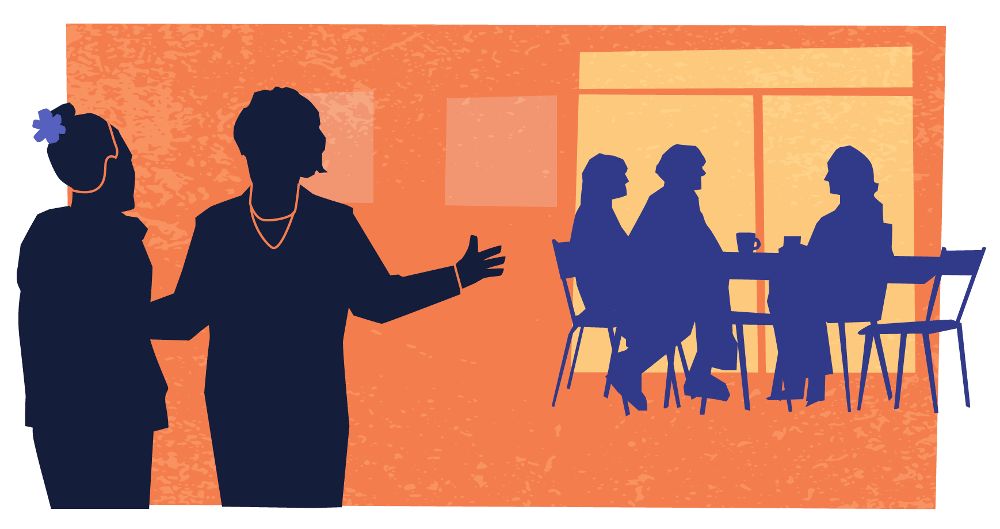
Importantly, we will benefit from trying to connect with others. We are never too old to make new friends. You are not alone. Joining a larger community, such as your local parent carer forum, is an excellent way to find a sense of belonging. In Central Bedfordshire, the *SNAP (Special Needs Action Panel) Parent Carer Forum are a group of parent carers, at various stages of this same journey. There are also forums in Bedford and Luton. There is strength in numbers.
SNAP – “Joining a support group in your local area can help you to understand more about your child and validate how you are feeling. You will also meet other like-minded parents and carers who can provide non-judgmental advice and emotional support. You can google or search on social media for your local town, the condition and SEND to find groups near you.”
Support groups are low-hanging fruit for finding connections as there are others we can easily relate to. We are more likely to feel understood and feel more free to share our worries and concerns. There is value in talking with other parents who ‘get it’ and receiving their perspectives.
“So, I began to empower myself; I told myself things wouldn’t always be this bad; it would pass. I still found talking to people and opening up hard, so I joined a few groups, listened to others and gained some confidence. This didn’t happen overnight; it took years, but with every new thing I tried, I was connecting with other people and reducing my feeling of isolation. I learnt that I was not the only one, I was not alone.” – Heidi, our SEND Parent Mentors Coordinator
Perhaps even more so than ‘normal’ parents, SEND parents are inclined to support one another. Volunteering is a good way to help others whilst feeling less isolated. Find out about becoming a SEND Parent Mentor here.
Online friendships can help if time is short. Moreover, talking with others online has the benefit of not being restricted by your location. Social media can be a useful first step, particularly if you are anxious about talking with people face to face. For example, private Facebook groups and other online forums can provide a way to connect with other like-minded parents.
Overall, it helps to talk with people that we can be our authentic selves around. This could be existing friends or family you trust. If there are things they won’t understand/haven’t had the experience, try talking just about how you feel. They can’t support you if they don’t know how you are feeling. Indeed, we can feel most isolated when no one knows we feel isolated.
Compare, Despair
Ultimately, avoiding comparison can lead to greater satisfaction and happiness in our lives. An alternative approach is to compare yourself against your own standards and achievements. Try to remember that everyone has their struggles, and be self-compassionate towards your own situation.
Regarding social media – Keep in mind that people tend to post only the best parts of their lives, and portray themselves in their best light. Being a parent is not always easy, everyone has struggles. There is no such thing as the perfect parent.
Get help
If your physical or mental health is suffering because of your isolation, it’s important to get help. Talk to your GP.
There are various voluntary organisations that may also be able to offer support. This includes our charity’s home visiting service for families in Central Bedfordshire with a child under the age of five.