

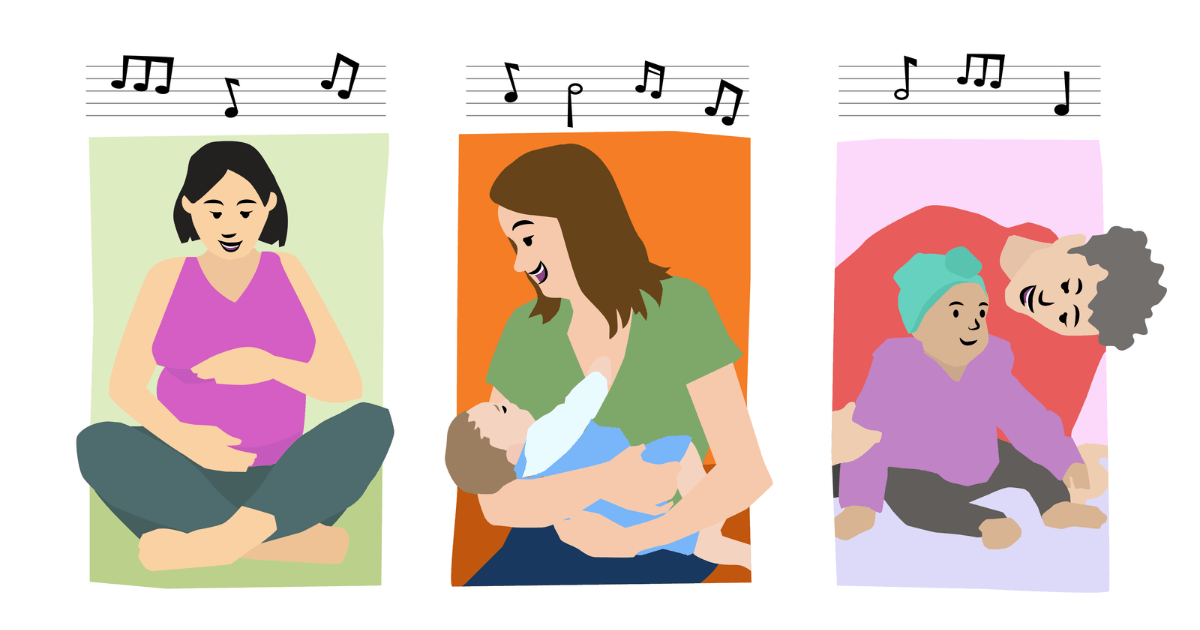
When you sing nursery rhymes and songs with your child, you’re already giving them something special. Yet, these moments do much more than you may think. Here are some reasons why nursery rhymes matter, plus a few tips you might find helpful.
Reason 1
Reason 2
Reason 3
Reason – Bonding
Songs and rhymes aren’t just great for children; they’re good for us as parents, too. The sound of your voice is special. It soothes and comforts your child. Moreover, research suggests that singing can benefit our health and well-being.
Singing to your baby or together with your young child can help you both feel close and connected. It can increase the production of oxytocin, the ‘love hormone’, which promotes feelings of well-being, reduces stress, and supports secure attachment. These shared moments together help build a strong bond between you and your child.
If you ever feel unsure about how to play with your little one, singing and rhyming is a great place to start. You don’t need any special toys or materials; just your voice.
You might not think of yourself as musical, and that’s okay. Most of us don’t! Your child doesn’t mind if you sing out of tune. To them, your voice is the best sound in the world. Embrace the fun, be playful, and enjoy being silly. Initial feelings of embarrassment or self-consciousness soon pass. Remember, you can do this; your effort matters more than perfection.
Useful Tips
- You can begin before birth, singing to your bump. Your baby can listen to the rhythm and pattern of your speech even while in your womb.
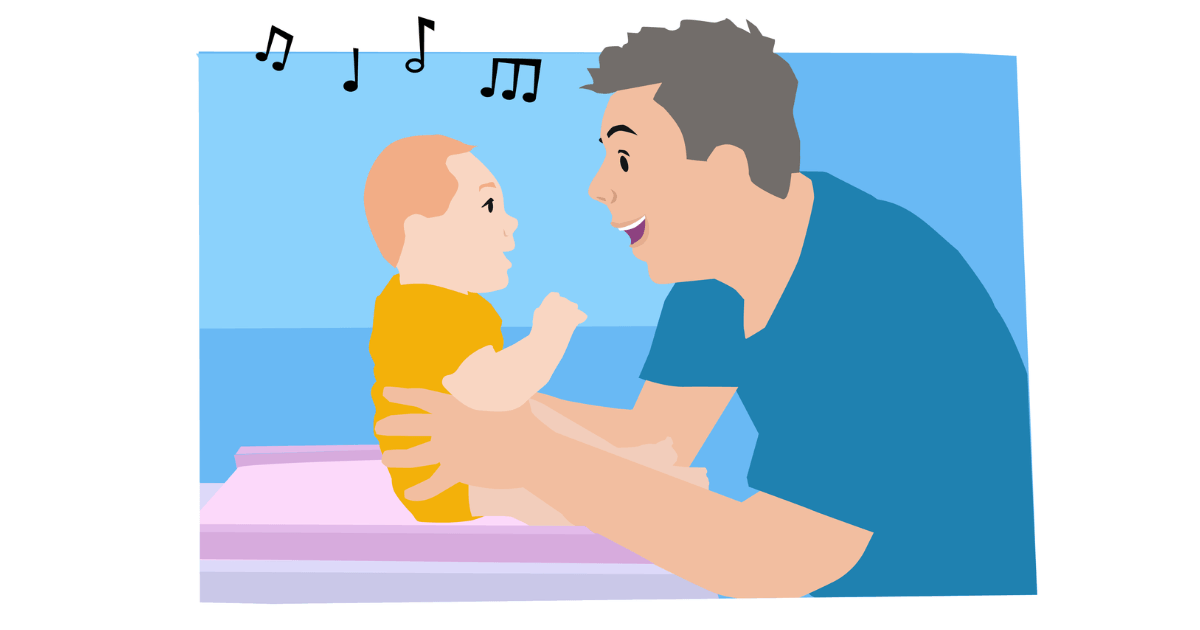
- Aim for eye contact with your baby whilst you sing.
- Here are some rhymes and songs that can be useful for different age groups:
- For infants, simple rhymes with a gentle rhythm are ideal. Rhymes that involve physical touch, such as “This Little Piggy”, are excellent for sensory stimulation and developing a close connection.
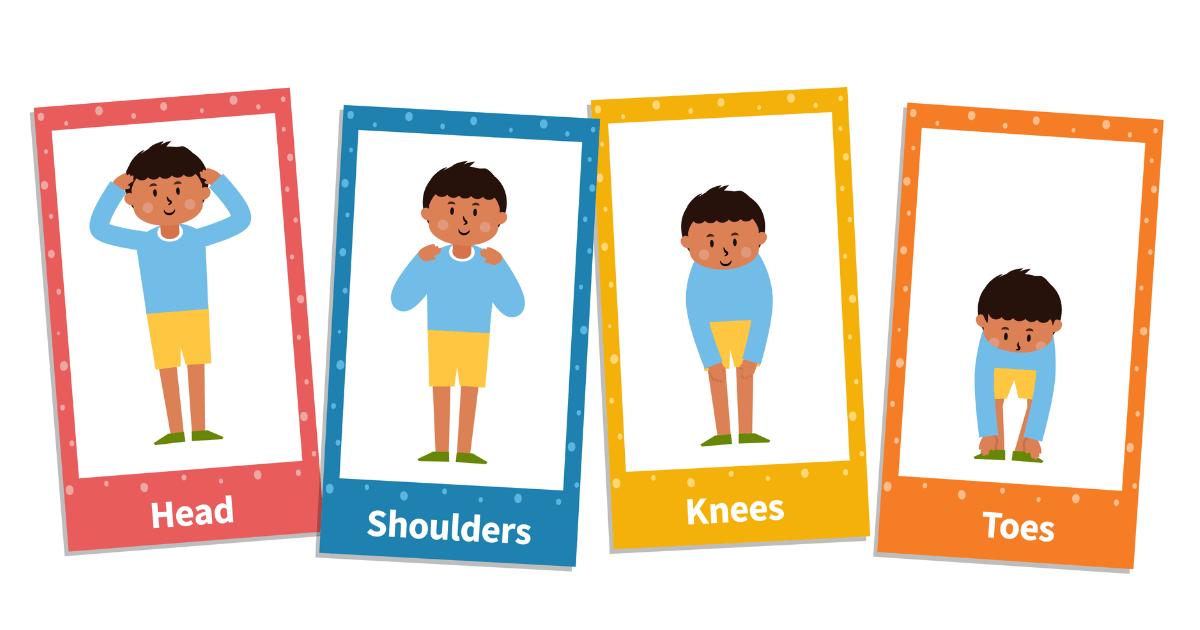
- For toddlers, action songs are perfect for this age. “Head, Shoulders, Knees and Toes” is a classic. Rhymes like “Incy Wincy Spider” are also great for when you are sitting together.
- For preschoolers, nursery rhymes and songs that introduce new words, have wordplay, or exercise memory and creativity are great. “Humpty Dumpty”, “The Grand Old Duke Of York”, and “B.I.N.G.O” are all examples.
- With all early years children, be interactive and expressive. You could:
- Use physical touch, such as tickles or cuddles. “Round and Round The Garden” is a great example.
- Use hand motions and body movements to accompany the words.
- Use facial expressions. Exaggerate your mouth movements, widen your eyes, and smile while you sing.
- Use different vocal tones and experiment with sounds, such as car, animal, and other environmental noises.
- Use props like a teddy bear or other toys to support the lyrics and add visual stimulation.
- Be observant:
- Observe your child’s responses to your vocals, expressions, and movements,
- Acknowledge their responses to the rhymes/songs, give encouragement, and show you value their engagement. Depending on their age, they might make sounds, sing-along, copy movements, or simply smile and hold eye contact.
- Notice which songs help your child relax or cheer up. Experiment with different songs and rhymes. Some tunes can really change their mood.
- Keep an eye on your child’s mood and stop when they’ve had enough.
- Read books together with your child that include rhyming words or are based on nursery rhyme stories.
Reason – Early Child Development
Singing and listening to rhymes can support your child’s development in so many ways. Studies suggest that rhythmic information found in nursery rhymes and sing-song speech is important for building language skills. Evidence shows the rhythm and patterns support early years:
- Language and Literacy Skills:
- Phonics: Singing and listening to rhymes and songs can help your child engage closely with the sounds in words. The rhythm and repetition make it easier for them to notice and play with sounds and syllables. This is an important step before they learn to read and write.
- Vocabulary: Rhymes are a great way to introduce new words. Even if your child doesn’t know what a word means at first, hearing it repeatedly in a song helps them better remember and understand it over time.
- Speech: Hearing you sing, your child can try to copy the sounds you make. It’s an opportunity to hear and practice saying new words. Repeating rhymes helps them learn how to form words clearly.
- Cognitive Development:
- Sequences: Many songs and rhymes have a structure, with a beginning, middle, and end. They tell a little story. These can help your child learn about order and assist them in predicting what might happen next.
- Memory and Concentration: Similarly, the repetition and predictable patterns in songs and rhymes can support your child’s memory and concentration. As well as their participation in performing the rhymes and songs.
- Math Skills: Many rhymes include counting and patterns, like “1, 2, 3, 4, 5. Once I Caught a Fish Alive.” This can help your child start to understand numbers and math concepts.
- Physical Development:
- Motor Skills: Action songs like “Head, Shoulders, Knees, and Toes” get your child moving. These movements help them practice both big and small actions with their bodies.
- Coordination and Rhythm: Clapping, tapping, and moving to the beat help your child learn about rhythm, tempo, and coordination.
- Social and Emotional Development:
- Emotional Expression: Music, in general, offers children a safe and healthy means to express and explore their feelings.
- Social Interaction: Singing together helps children learn to take turns and feel like part of a group. It can also comfort them in new or tricky situations.
- Building Confidence: When your child learns a new song or rhyme, it can give them a real boost of confidence and support their self-esteem.
EYFS
The Early Years Foundation Stage Framework highlights rhymes and songs as valuable in supporting child development. The EYFS is a set of standards that childcare and schools must meet for children from birth to age five. It aims to ensure your child has the skills and knowledge they need to begin school.
Useful Tips
- Rhymes and songs support your child’s learning right from the start. Again, you can begin early, even as a bump.
- Don’t be afraid to sing the same songs over and over. Repetition is key for children to learn and remember words, sounds, and actions.
- Sing slowly so that your child can more easily pick up on the melody and lyrics.
- You can sing and rhyme in your home language as well as English.
- Encourage imitation of words, sounds, and movements. Model:
- How to sing short parts of the song or rhyme, and ask your child to copy.
- Using a singing voice, which is different from the way we typically speak. Encourage your child to use their singing voice. Young children do not have the vocal range of us adults, which may make it harder for them to copy your singing pitch. It can be helpful to use a higher singing voice than your regular speaking voice.
- Moving to music. Use hand motions and body movements to accompany the words. For example, for “Itsy Bitsy Spider,” have your fingers climb up and down. For “Head, Shoulders, Knees, and Toes,” touch each body part as you say it. Encourage your child to match your actions.
- Remember, all children are different and develop at various rates. However, you should talk to your health visitor or GP if you are concerned that there’s a significant delay in your child reaching an expected milestone.
- Over time:
- Grow your range of nursery rhymes and songs, and repeat them. Words for Life (an initiative by the National Literacy Trust) provides lyrics for popular nursery rhymes.
- As your child grows, you can ask them questions about the lyrics, such as “What noise does that make?”
- Once your child is familiar with a rhyme, try a ‘fill-in-the-blank’ game. Sing a line and pause, letting them fill in the missing word. For example, “Twinkle, twinkle, little…” (star). This encourages them to participate and shows they understand the pattern.
- Attend group nursery rhyme activities, such as at your local children’s centre or library.
- Aim to sing nursery rhymes and songs regularly.
Reason – Routines & Transitions
Songs and rhymes can also be useful tools for managing daily routines. Being a parent is not always easy, and our focus can’t always be on learning opportunities. Yet, incorporating songs and rhymes into our lives can have the added benefit of making our routines go more smoothly.
Useful Tips
- Link rhymes with tasks and events:
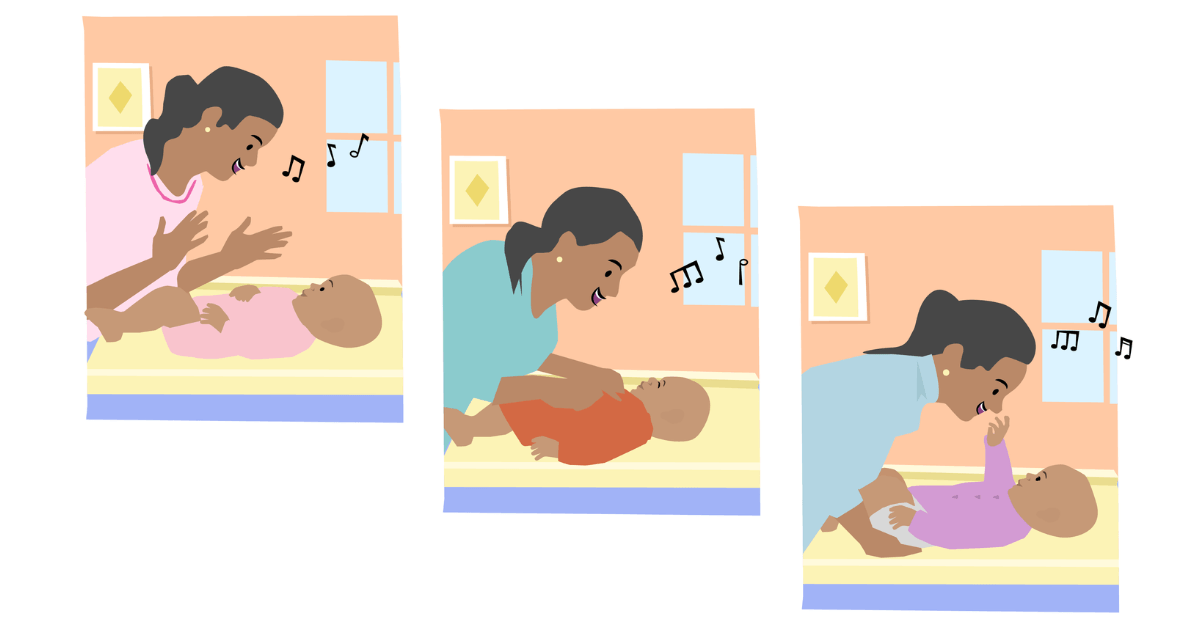
- Try singing or saying rhymes while you feed your child, get them dressed, or change their nappy. It can make everyday moments more fun and give your child more chances to hear and learn new words.
- You can add and mix up words/verses in songs and rhymes to make them more relevant to the situation. For example, take a familiar tune like “Twinkle, Twinkle, Little Star” and change the words to fit your daily routine. “Twinkle, Twinkle, Bottle Time, Together We Can Learn To Rhyme.”
- When you’re out and about, link songs and rhymes to what you see, for example, sing “Old McDonald” if you visit a farm.
- Link with transitions:
- Try using a special song for specific times, such as a tidy-up song before putting toys away or a bath time song to get ready for the tub. A getting-ready song can help mornings go more smoothly, and a lullaby can let your child know it’s time to wind down for bed. These help your child know what’s coming next and can make routines easier.