

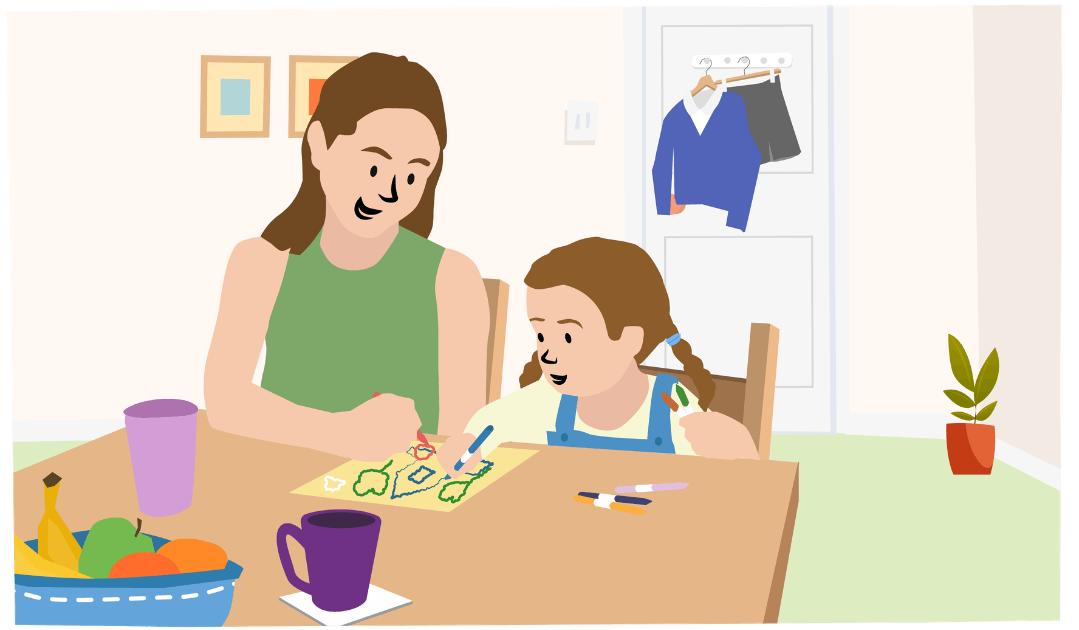
As a new academic year nears, ‘school readiness’ is a term many parents hear. Making sure your child is ready for school can be worrying and feel overwhelming. Yet while the focus is on your child’s progress, it’s really about preparing your family for the transition to school. Here, we explore what school readiness actually means and help you reframe getting ready for school as simple, everyday bonding moments.
What Is School Readiness?
School readiness refers to how prepared your child is for the academic, emotional, and social challenges of school. It’s about the physical, social, emotional, and cognitive skills they’ve already developed by the time they start. Your child will already have many of these skills.
School readiness is linked to the Early Years Foundation Stage (EYFS), a set of standards for children’s learning and development in nurseries and other early years settings. You may have heard of the EYFS. However, these standards are not aimed at us parents.
All children are unique and start school with a different range of abilities. School readiness is about supporting children’s development, not judging progress. Some children will quickly learn skills, whereas others will need more time and practice.
What Does This Mean for Parents?
We all want our children to thrive and enjoy school. As their first and most important teachers, we can help. School readiness is simply about creating a supportive environment for growth, development, and transition from home life to school life.
Being a parent is not always easy, and we can’t always be focused on formal learning. However, there is huge value in the day-to-day learning experiences we are already (or could be doing) together. It can be helpful to think of school readiness as home readiness and child readiness…

Home Readiness
As parents, our readiness is often overlooked. Yet, being able to create routines, understand how to support our child’s development, and cope with the emotions of having our child away from us is important.
It’s helpful to keep in mind that any interaction is a learning opportunity. Most brain development occurs during the early years, and our interactions can support learning, behaviour, and health. A great way to think about how you can support your child’s learning is by using Opportunities, Recognition, Interaction, and Model (ORIM):
Opportunities
Provide chances for your child to learn. This could include:
- Reading together. Books are great, and you can also point out street signs and labels at the shops.
- Listen to different types of music. Sing songs and rhymes.
- Baking and cooking together.
- Making tools for creativity available, e.g. crayons/pencils, paints, paper, and more.
- Organising play dates or attending playgroups for your child to interact with other children.
- Getting outside, playing outdoors, seeing things, and visiting places like the library.
- Let them practice packing and carrying a bag.
- Let them practise dressing and undressing themselves.
- Let them practise wiping, flushing, and washing their hands.
- Let them help with real-life tasks, e.g., writing a shopping list.
Recognition
Praise and encourage your child’s achievements, no matter how small. Acknowledge what your child did well to show them you value their efforts. You can also follow up the praise with a suggestion for improvement next time, e.g. “What would be even better is next time to put your shoes on the right feet.” Aim to boost their confidence, feel pride in their progress, and understand how they can get even better. Opportunities for recognition could include:
- Writing, drawing, reading, speaking.
- Sharing, taking turns, and cooperation.
- Following rules and instructions.
- Curiosity and insightfulness.
- Trying new activities and independently exploring new environments.
- Using the toilet independently.
- Things like putting on socks and shoes, doing up buttons and zips – these are learned skills.
Interaction
Help your child to improve their communication and social skills. This could include:
- Engaging in everyday conversations to help expand your child’s vocabulary.
- Ask them questions, and help them describe what they’re doing. Encourage your child to ask you questions and help them find answers.
- Talk about their feelings and help them describe and label their emotions.
- Make up stories together.
- Help them draw shapes and pretend to write (by teaching them the shapes and sounds of letters).
- Help them to hold and eat using a knife and fork.
- Practice giving and following simple instructions with them.
Model
Children learn by imitating what they see us do. If they see you enjoying reading, writing, and talking, they’ll want to too.
Remember, your child is unique, and children learn and develop at different rates.
Routines
Establishing predictable morning and bedtime routines at home helps give your child the stability and energy to navigate a school day packed with new challenges. These familiar patterns can also help ease the transition into the classroom, where children will encounter daily routines like snack and tidy-up time. For practical guidance on building these foundational habits, the NHS offers advice on topics such as healthy sleep routines and mealtime routines.
Using Opportunities, Recognition, Interaction, and Model helps nurture children’s confidence, independence and wellbeing. These day-to-day learning experiences pave the way for child readiness…

Child Readiness
This is what most people think of when they hear “school readiness”. Child readiness focuses on the skills your child will benefit from having as they start school. These include being able to talk in sentences, dress and undress themselves, use the toilet on their own, eat and drink without help, share and play with others, and feel confident when away from you. Again, all children are unique and start school with a different range of abilities.
The NHS offers advice on practising the skills children will need at school, such as following instructions, getting dressed, and more.
Useful Tips
In the lead-up to starting school, you can support your child with positive expectations about school and help them feel safe and secure:
- Talk about what school may be like and answer their questions.
- Talk openly about any feelings they have about starting school. Reassure them that it’s normal and okay to feel nervous or excited.
- You can read books together about starting school to normalise the experience.
- Look at photos of the school environment to help them visualise where they will be. If possible, visit the school and the new classroom to help your child become familiar with the environment.
- Help them understand the school’s location and how they will get there.
- Let them pick their school bag, water bottle, etc.
- When you have their school uniform, help them practice putting it on and taking it off. Consider hanging it in a home corner so they can become familiar with it.
- Practice with them opening their lunchbox themselves.
- Toilet accidents do happen, and it’s useful to teach your child that it’s okay to ask for help and who to ask.