
It shouldn’t be a secret. Domestic abuse is common, and it can start or increase during pregnancy. We should talk about domestic abuse and pregnancy. The more aware we are, the better we can protect ourselves and give our children the best start in life.
Myth: ‘Domestic abuse is not common’ - Click Here
There are myths around domestic abuse that help to hide the issue. These need a reality check. Every 30 seconds, a call related to domestic abuse is made to the police. What’s more, domestic abuse often goes unreported to the police. Police data only gives us a part of the true, hidden picture.
You Should Know
The risk of domestic abuse is high during pregnancy and after childbirth. It is estimated that 40-60% of victims are abused while pregnant. For many, abuse begins or worsens at this time.
Domestic abuse harms both pregnant victims and their babies’ development. Unborn children are at higher risk of injury, infection, miscarriage, premature birth, or death. High stress during pregnancy may also affect a baby’s brain development. Abusers may also use control to stop mothers from accessing things the baby needs, e.g. antenatal appointments.
Risks to infants can continue after birth. Living in an abusive environment can harm a child’s development at every stage in life.

Myth: 'Children are not affected by one parent abusing another’ - Click Here
The well-being of parents and their children is inseparable. Children are the silent victims of domestic abuse. They are victims if they see or hear, or experience the effects of, the abuse. As well as experiencing direct abuse, indirect experience from living around an abusive relationship is damaging to children. This can include long-term negative effects into adulthood and difficulties with their own relationships in the future.
Why does domestic abuse sometimes start during pregnancy?
Abuse can start or get worse during pregnancy for many reasons, but control is always at the root. Pregnancy can make it easier for abusers to gain control, and some may feel jealous of the baby. Ultimately, abuse is about control.
Control In Disguise
All couples have disagreements and arguments sometimes, but that is not abuse. Domestic abuse is about power and control.
The truth is, it is not always easy to recognise that you are in an abusive relationship. Abusers often pretend their actions come from care or concern. Abuse can happen once or many times, and it often gets worse over time. Many victims do not recognise what is happening, or are not ready to believe it’s abuse. But domestic abuse still hurts us and our children.
Myth: 'You need to be physically hurt for it to be domestic violence' - Click Here
As the many issues facing victims have come to light, the term ‘domestic abuse’ has steadily replaced ‘domestic violence’. It is necessary because there are many forms of abuse you could encounter. Simply, not all abuse involves physical violence. Abusive actions and behaviours can often be categorised as (but are not limited to) physical, sexual, psychological/emotional, or financial. This includes digital domestic abuse.
Coercive Control
Some abusive behaviours, we instinctively know are wrong. Yet, others are more deceptive. This is often true with controlling or coercive behaviours. Coercive control plays a central role in most domestic abuse cases.
Abusers use control to make us depend on them. They try to cut us off from support, take away our independence, and control our daily lives. This makes it harder to leave and easier for them to take advantage of us.
Think of ‘coercive’ as persuasion by force. Abusers may use force or threats to get their way. This can include physical or sexual assault, humiliation, or intimidation to hurt, punish, or scare us.
Abusers study us and know what buttons to press and when. Control and coercion are the tools they use. Coercive control is usually a pattern of behaviours or events. Questioning your relationship can help reveal what is hidden. If you feel manipulated, undermined, monitored, or scared, these may be signs of abuse.
Myth: ‘If things were that bad, they’d just leave’ - Click Here
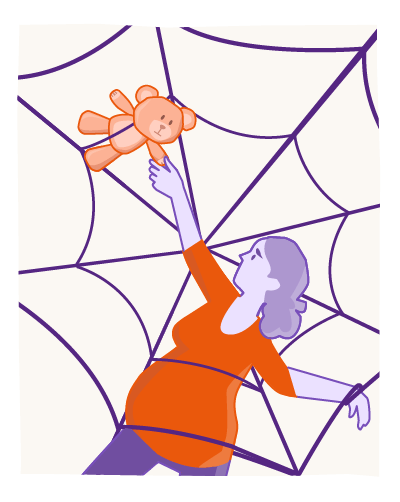
This statement is wrong. It places the responsibility for finding a solution to the abuse on the victim. It also ignores the complex web of control, fear, and practical barriers an abuser creates. Abusers actively work to stop us from leaving. In reality, leaving can be dangerous. Planning for your safety is crucial.
Do You Feel…
Click on the tabs below for signs you may be experiencing coercive control. Our resource on understanding domestic abuse also includes questions to help you reflect on your relationship.
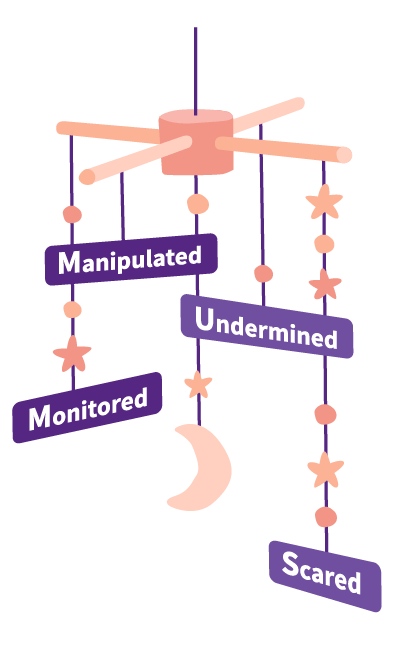
Manipulated? Manipulation is when abusers try to control what you do and keep you in the relationship. They might use guilt, threats, lies, or act vulnerable to get their way.
Do they:
- Accuse you of flirting or cheating when you are not?
- Make unreasonable or trivial rules and demands you must follow?
- Degrade or undermine your ability to parent?
- Act differently in front of others to create a false impression?
- Prevent, restrict or sabotage your –
- Relationships with your friends, your family or your children?
- Work life or education?
- Access to food, sleep, medications or medical/health care?
- Ability to make decisions? For example, what you eat, when you sleep, where you go, what you do, and who you are with.
- Contraception / your reproductive rights?
- Money or finances?
- Control your ability to make or use your money?
- Use your money or other resources without your consent?
- Create debts in your name?
Undermined? Undermining is another way abusers try to make you doubt yourself and depend on them. Do they:
- Make you question your judgments, your memory, or your sanity?
- Deny there is abuse or blame you for the abuse?
- Use information you have shared with them against you?
- Make you doubt your self-worth?
- Lower your confidence and self-esteem?
- Constantly criticise you?
- Put down your opinions, abilities or achievements?
- Put down or undermine your ability to parent?
Monitored? Monitoring is when abusers keep track of what you do. Along with manipulation and undermining, monitoring helps them manage you. Do they:
- Track or follow you?
- Appear in places you go?
- Use other people to monitor you?
- Set the rules you must live by?
- Have unreasonable expectations around contact with you – repeated calls, texts, etc?
- Monitor –
- Your time?
- Internet use?
- Phone use?
- Where you are and what you are doing?
- When you sleep?
- What you eat?
- What you wear?
- Make you change your behaviour because you’re afraid of what they might do?
- Make you feel isolated with nowhere to turn for support?
- Try to make you fear them or what they might do?
- Threaten to harm or take away your baby, children, your pets, or your property?
- Threaten to harm you?
- Threaten to humiliate or expose you, e.g. online?
- Threaten to harm themselves?
- Make you feel scared of what their reaction might be?
Clare's Law - Click Here
If MUMS the word, don’t be silent, get support.
What You Can Do
Abuse is never your fault. Domestic abuse during pregnancy or at any time is wrong and never justified. You do not have to stay silent. Always reach out for support.
Every family and situation is different. Your safety and your children’s well-being come first. If there is an ongoing emergency or a threat to life, call 999 right away.
You can report abuse to Bedfordshire Police online, at a police station, or by calling 101. You can also talk to someone you trust, such as your GP, midwife, or health visitor. The Bedfordshire Domestic Abuse Partnership signposts you to a range of support services. This includes information on emergency housing, legal help, Independent Domestic Violence Advisors (IDVA), and mental health support. Specialist services can also provide confidential advice.

‘The police won't / can’t help’ - Click Here
You may have genuine concerns about reporting your abuser to the police. This is understandable. However, domestic abuse is not a private family matter. Non-physical abuse can be just as damaging – coercive control, for example, is a crime. Certainly, you should not feel any shame. Bedfordshire Police have Victim Engagement Officers (VEOs) to provide support throughout the process.
Police have powers that support services do not. They have a duty to respond and take positive action involving domestic abuse incidents. Police can provide immediate physical protection if there’s a risk of harm. They can arrest the abuser if it is “proportionate, necessary, and lawful” to do so. The police will begin an investigation and start gathering evidence. This may lead to criminal proceedings.
They can also issue a Domestic Violence Protection Notice. This could lead to a Domestic Violence Protection Order, which can ban the perpetrator from contacting the victim or returning to the home for up to 28 days. Police reports can provide evidence that supports an application for civil court orders (injunctions) like a Non-Molestation Order or an Occupation Order.
Police play a key role in helping victims at high risk of harm. They share information with other agencies, such as housing, social services, and specialist support, to create a coordinated safety plan.
Bedfordshire Domestic Abuse Partnership
Home-Start Bedfordshire is part of the Bedfordshire Domestic Abuse Partnership. Our charity runs two projects. Own My Life supports local female survivors of domestic abuse. It helps them regain control and move forward in their life after abuse. Helping Hands is an education programme we deliver in local primary schools for children in Years 3 and 4. It aims to help children understand safety and healthy relationships.