

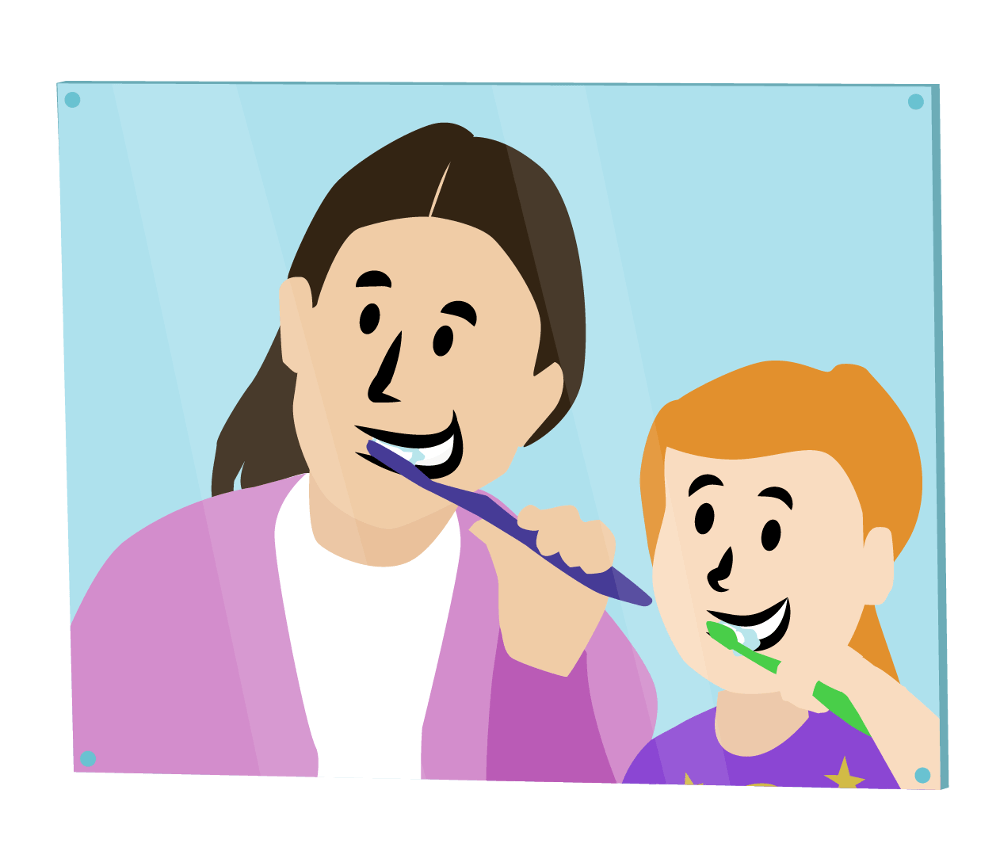
Building healthy habits starts young, and that includes brushing our teeth. Having healthy teeth and gums is essential for our children’s overall well-being. As parents and caregivers, we can support our children by establishing positive oral health routines. Here, we offer useful information and ideas to support your family’s oral health.
Thanks to Rachel Keith, Oral Health Improvement Manager at the NHS for providing the guidance.
Key Areas
It can be helpful to look at supporting our child’s oral health in three key areas: their diet, tooth brushing, and the dentist.
Diet
The aim of diet (in the context of oral health) is to limit sugary and acidic foods and drinks to mealtimes. For example, when offering them snacks, choose plain rice cakes over sultanas or flavoured yoghurt. Water and milk should be your child’s main drink options.

Diet
The aim of diet (in the context of oral health) is to limit sugary and acidic foods and drinks to mealtimes. For example, when offering them snacks, choose plain rice cakes over sultanas or flavoured yoghurt. Water and milk should be your child’s main drink options.
Brushing
Toothbrushing starts from the moment our child’s first tooth appears and supervision is needed until they are at least 8 years old.
Their toothbrush should be replaced every 3 months or sooner if the bristles become frayed or damaged. In addition, it should be replaced following a period of sickness to reduce the risk of spreading or reinfection. Every family member should have their own toothbrush, these shouldn’t be shared.
It is advised to start young children on mint-flavoured toothpaste straight away and to avoid sweet-flavoured toothpaste. However, if your child is sensitive to strong mint flavours, consider using an unflavoured or fruit-flavoured paste (with the correct fluoride content). OraNurse is used widely in special schools as it does not have a flavour and doesn’t foam like regular kinds of toothpaste. OraNurse can be bought online or you can ask your local pharmacist. Avoid whitening toothpastes for children as they could be too abrasive on their teeth enamel.
The fluoride content in the toothpaste is important. You can find this in ppm (parts per million) on the box or the tube.
- Under 7s: no less than 1000ppm of Fluoride.
- 0-3 year-olds should have a smear of toothpaste (grain of rice size) on their toothbrush.
- 3-6 year-olds should have a pea-sized blob, but only if the child is spitting out and not swallowing the toothpaste (otherwise, a grain of rice size).
- Over 7s and adults: 1350-1500ppm of Fluoride.
It’s important to support children in developing good toothbrushing techniques. Help with brushing their teeth at least twice a day, especially before going to bed. This should take place at least half an hour after eating or drinking. For two minutes, guide your child around their mouth whilst brushing, using small circular motions, not forgetting to brush the gum line. Instruct your child to spit as foam builds up in their mouths and not to swallow the toothpaste. There’s no need to rinse, not doing so retains the toothpaste’s benefits. To prevent toothpaste from foaming, don’t wet the toothbrush.
Dentist
Your child’s first dental appointment should be when their first tooth appears or by their first birthday. Talk with your dentist about the benefits of fluoride varnish treatments for your child’s teeth.

Make Brushing Fun
Brushing teeth can be a struggle for little ones. When establishing a routine, it is worthwhile choosing your timings well, i.e. avoid overtiredness and stressful times of the day. Here are some tips to turn it into an enjoyable experience:
- Reward: Give praise for compliance. Build on each achievement by reminding them of how well they did before. Consider implementing a reward chart for consistent brushing routines.
- Brushing Together: Brush your teeth alongside your child, making it a bonding activity. Try facing each other and mirroring how you brush at the same time.
- Sing a Song or Watch a Video: Use catchy tunes or entertaining videos like “Hey Duggee” or “The Tooth Brushing Song” to make brushing time fun.
- Apps and Games: Explore interactive apps or games that make brushing more engaging.
- Choose Fun Tools: Let your child pick a colourful toothbrush or a fun timer to add excitement.
- Offering choice: Try having a few different colours of toothbrushes they can choose from to suit their mood.
A healthy diet, consistent brushing habits, and regular dental visits are the cornerstones of good oral health. By establishing positive oral health habits early on, you can support your child’s development. Remember for urgent dental care or out-of-hours care, call 111 or visit 111.nhs.uk.