

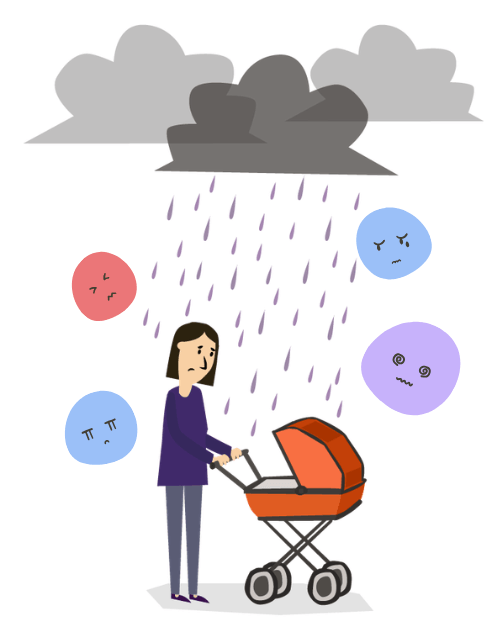
If you’ve recently had a new baby and aren’t feeling ‘right’, you might be asking yourself: what does postnatal depression feel like?
Over the years, we’ve spoken with many parents who are experiencing postnatal depression (PND). The truth is postnatal depression doesn’t look or feel the same for everyone. Yet there are some common experiences.
Here we explore how PND can feel emotionally, mentally, and physically and how you can get support.
What Is Postnatal Depression?
Unlike the ‘baby blues’, which are normal and usually pass within two weeks, PND can persist and feel much heavier. It is a common mental health condition and can manifest suddenly or over time. It can be mild or severe. You may notice signs during pregnancy, in the immediate weeks after birth, or anytime in the year following birth. New or repeat mothers may experience postnatal depression, as can fathers and co-parents. PND can feel difficult to cope with, but there is support available, and symptoms usually get better with treatment.
How Postnatal Depression Feels in Real Life
As postnatal depression is persistent, you should look for symptoms lasting more than two weeks. Parents supported by our charity often describe PND using these key experiences…
Feeling down, tearful, empty/numb - unable to find any joy.
“Never bothering to plan anything nice, because you’re unable to feel excitement or pleasure anyway.”
“Just like any other depression I’ve had in the past – struggling to see the point in each day, being unable to follow a basic TV show or remember a conversation; an overwhelming sense of doom and despair. Only this time it is happening at a time when you are told you should be having the time of your life, and when other mums seem to be having the time of their lives.”
Feeling foggy or as though things aren’t real - problems concentrating, making decisions, or remembering.
“Like living outside of reality. I feel like I’m watching life take place in front of me but I’m on the other side of the glass. I keep banging to get in but nobody can hear me.”
“Time lost all meaning. I measured life not by mornings or evenings, but by feeds, nappies, and the precious minutes of broken sleep in between.”
Feeling exhausted or unable to cope - low energy levels, despair, hopelessness, not looking forward to things.
“Waking up every morning and wishing it was bedtime, but then not wanting to go to bed at night because you know that brings you closer to yet another day. Basically it amounts to not feeling able to take part in life.”
“I wasn’t sleeping and felt completely physically exhausted. I couldn’t relax mentally either. My mind would just move from one thing to the next.”
Feeling disconnected from baby - hostility or indifference to baby, difficulty bonding.
“Hearing others talk about the ‘high’ they felt after having their babies, and asking myself why I never felt anything close to this.”
“I started to feel angry and get annoyed when my baby was screaming or crying, then after I’d feel really guilty. I began to have intrusive thoughts. It would go round in a cycle. I’d get angry then feel guilty. It was awful, I just felt so bad all the time about being a mother.”
Feeling guilty or like a bad parent - worthlessness, useless, blaming yourself, low self-confidence/esteem.
“Each hour she stayed awake felt like another reminder that I was getting it wrong. I believed it was my fault—that if I were a better mother, she would sleep.”
“Looking at my wonderful baby and feeling guilty that she isn’t enough to get me through the day.”
“The unshakable belief that you are doing a rubbish job and the crippling guilt that comes with this.”
“I was capable, confident, and trusted. Yet somehow, when I became a mum, I convinced myself I couldn’t care for one tiny human.”
Feeling irritable, restless, or angry - hostility or indifference to partners.
“I found my partner really frustrating, and it would make me angry because I couldn’t understand why my partner didn’t feel like me. Mostly, I felt resentful because I believed his life hadn’t changed at all when mine had been blown up by having our baby.”
Feeling anxious, fearful, panicky.
“There was never a moment when I questioned how much I loved her. But what I didn’t expect was that I could love her with my whole heart and still find myself living in a world that suddenly felt dark, overwhelming, and filled with anxiety. The joy I had imagined was overshadowed by a constant sense of dread, as though a heavy cloud had settled over every day and I couldn’t see a way out.”
“For me it is not the same as feeling unable to bond with my baby. I feel an overwhelming need to protect and nurture my baby that interferes with my ability to enjoy a single moment of parenthood.”
Feeling disconnected from life - isolated, socially withdrawn, unable to relate to others.
“Wondering why everybody keeps saying ‘you must be so proud’, and then finally it dawns on you that actually you’re the weird one.”
Having intrusive thoughts - suicidal/scary thoughts.
In this BBC article, Emma shares that the birth of her third child triggered “petrifying” intrusive thoughts, pushing her to consider ending her life. Similarly, Louise shares that she experienced suicidal thoughts. Both women recovered from PND with support.
Intrusive thoughts are very common; many people experience them, but rarely talk about them. Having a thought does not mean you want to act on it or that you are a bad parent. Healthcare professionals understand this and are there to help, not judge.
Physical Symptoms
Physical symptoms can also be a part of PND, including insomnia or oversleeping, under- or overeating, unexplained aches or pains, stomach issues, headaches, muscle tension, and a lack of interest in sex.
“In the middle of the night, when the rest of the world seemed asleep, it felt as though I was the only person awake. The silence was deafening.”
As you’ve seen, postnatal depression doesn’t present the same for everyone. You may experience PND with many or few of these symptoms. It can be useful to talk to someone you trust, for example, your partner, a friend, or family member. They may see signs you have missed.
“When I look back, I realise I wasn’t failing as a mother, I was just struggling because I was unwell. Postnatal depression had warped what I believed about myself. It made me question my instincts and lose my confidence. It convinced me that I was alone, when really so many parents feel the same. My recovery didn’t happen overnight, but gradually the anxiety lessened, and I began to recognise myself again.”
Getting Support
It is important to know that postnatal depression is not a sign of weakness or failure as a parent. It is a recognised medical condition that is very common. You are at no fault. You should not judge yourself or feel judged due to your mental health.
It can feel difficult to reach out for help. Yet, without support, issues may grow unnecessarily. Postnatal depression can impact our relationships with children, partners, and family. It’s better to spot the signs and ask for support as soon as possible.
PND is treatable. Talk to a healthcare professional who will understand, such as a GP, midwife or health visitor. They can talk you through options, which may include talking therapies (like CBT), peer support groups, or medication if appropriate. You may also be referred to (and can self-refer to) community services such as:
- PANDAS (Pre and Postnatal Depression Advice and Support). PANDAS volunteers offer support for perinatal mental illness, including postnatal depression. Services are available via WhatsApp, a callback service, and in-person support groups. They also offer support aimed at fathers.
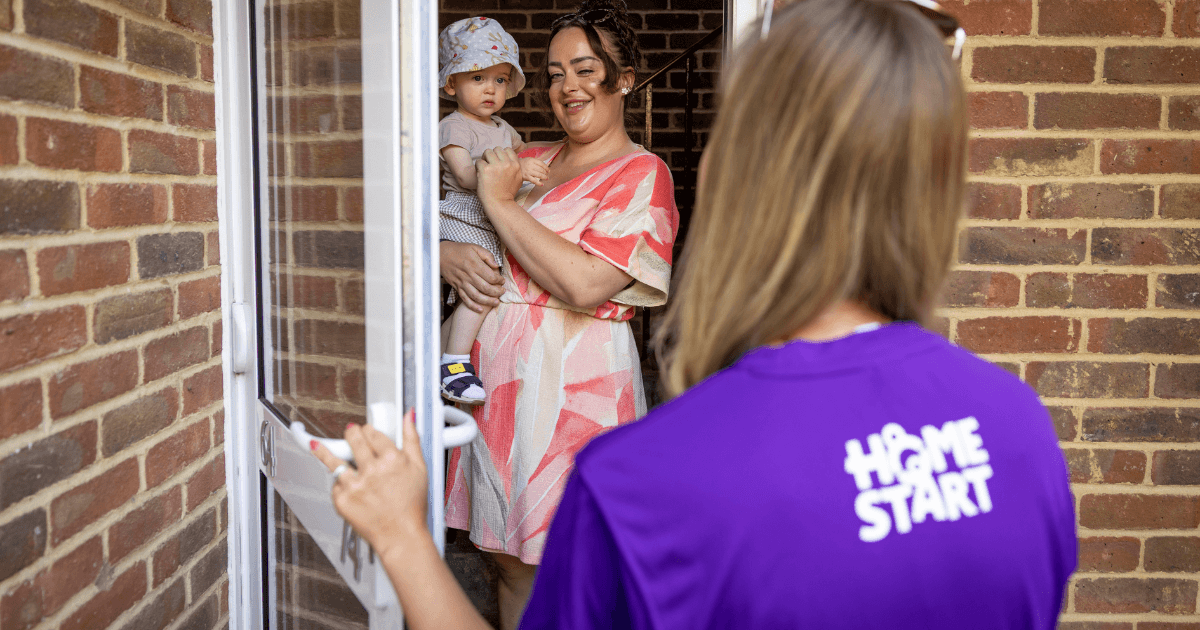
- Home-Start Bedfordshire. If you live in Central Bedfordshire, our home-visiting volunteers are here to offer you practical and emotional support during difficult times like postnatal depression. We match you with a trained volunteer to visit you at home once a week. They can offer a listening ear, practical help around the house, or simply hold the baby so you can take a breather. Our support is free and non-judgmental.
If you or a loved one are experiencing an active urge, plan, or intent to harm yourself or your baby, feel unable to stay safe, or have signs of postpartum psychosis (e.g., hallucinations, severe confusion, extreme paranoia), you should seek help immediately. Call NHS 111, or attend the nearest Accident & Emergency (A&E) department. If there is a risk of immediate harm, call 999.